Beginner's Guide to Folk Emerging
Starting your journey in Folk Emerging can feel overwhelming with its deeply simulated characters, ecosystems, and cultures. This beginner's guide will walk you through the essential mechanics and help you survive your first few turns in the Stone Age wilderness.
Your First Steps in the Stone Age
When you begin a new game of Folk Emerging, you take control of a small nomadic family trying to survive in a prehistoric landscape. Your immediate priorities are finding food, securing shelter, and keeping your family members healthy. The game is turn-based and playable at your own pace, so take your time to understand each mechanic before rushing ahead.
Start by exploring the tiles immediately surrounding your family. The wilderness is vast and filled with both resources and dangers. Pay attention to the terrain types around you — different landscapes offer different gathering opportunities and movement costs. Early exploration is key to finding reliable food sources and safe camping grounds.
- Scout your immediate surroundings before moving your entire group
- Prioritize food gathering in your first few turns to avoid starvation
- Keep your family together early on — splitting up increases vulnerability
- Pay attention to seasonal changes that affect resource availability
- Use the adjustable difficulty settings if the default feels too punishing
Understanding Your Characters
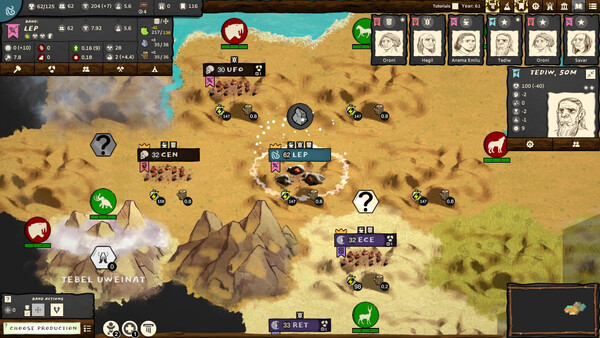
Folk Emerging features in-depth character simulation, meaning each family member has individual traits, skills, and needs. Some characters may be better suited for hunting, while others excel at gathering or crafting. Learning to assign tasks based on individual strengths is crucial for efficient survival.
Characters also form relationships with one another, which can affect morale and cooperation. Keep an eye on the social dynamics within your group. Happy, well-fed characters perform better and are less likely to cause internal conflicts that could weaken your family at a critical moment.
- Check each character's traits and skills before assigning roles
- Ensure all family members are fed — hungry characters perform poorly
- Monitor morale and relationships within your group
- Characters can learn and improve skills over time through repeated tasks
Exploration and Movement
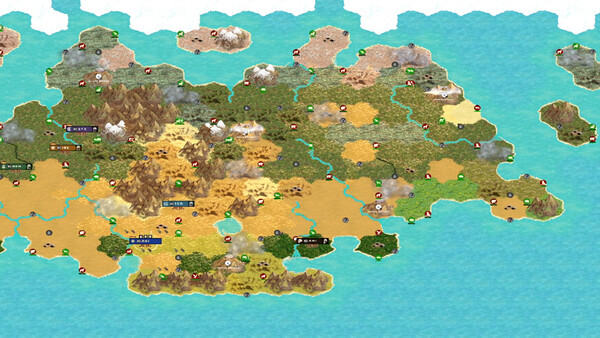
As a nomadic family, movement is a core part of gameplay. You are not tied to a single settlement — instead, you roam the wilderness seeking resources, trading opportunities, and safe havens. The map is procedurally rich with diverse ecosystems, from dense forests to open plains and river valleys.
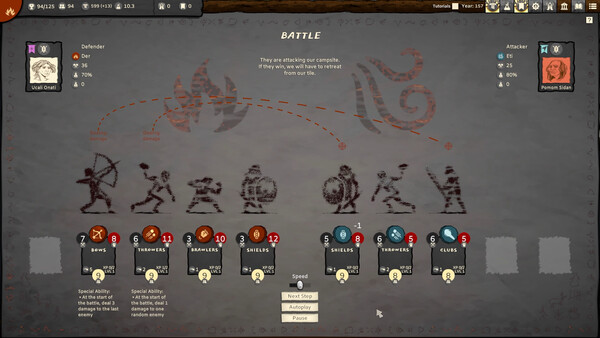
Plan your movement carefully. Traveling through rough terrain costs more action points, and moving your entire group leaves you exposed. Always have a destination in mind and scout ahead when possible. The wilderness holds both opportunity and danger, and getting caught in hostile territory without supplies can end a run quickly.
- Plan routes that follow rivers or coastlines for easier travel and water access
- Avoid moving your entire family into unexplored territory without scouting first
- Set up temporary camps at resource-rich locations before moving on
- Keep track of where you have been — revisiting known-safe areas can save you in emergencies
Saving and Difficulty Options
Folk Emerging supports save-anytime functionality, so you can pause your progress at any point and return later. This is especially useful during long exploration sessions or before risky encounters with wildlife or rival groups.
The game also offers adjustable difficulty settings, making it accessible to both newcomers and experienced 4X strategy players. If you are finding the survival elements too harsh, consider lowering the difficulty while you learn the ropes. You can always increase it later once you are comfortable with the core mechanics.