Technology & Discovery Guide
Technological discovery drives your progress from scattered nomads to the foundations of civilization in Folk Emerging. This guide explores how discoveries work and which technologies can transform your survival strategy.
How Discovery Works
Folk Emerging takes a unique approach to technology progression. Rather than a traditional tech tree with fixed research costs, discoveries emerge from your family's experiences and interactions with the world. Spending time near rivers might lead to fishing techniques, while repeated encounters with fire could spark the discovery of controlled flame.
This organic discovery system means that no two playthroughs follow the same technological path. Your environment, activities, and even the individual traits of your characters can influence what gets discovered and when. Paying attention to what your family does most often can help you guide discoveries in useful directions.
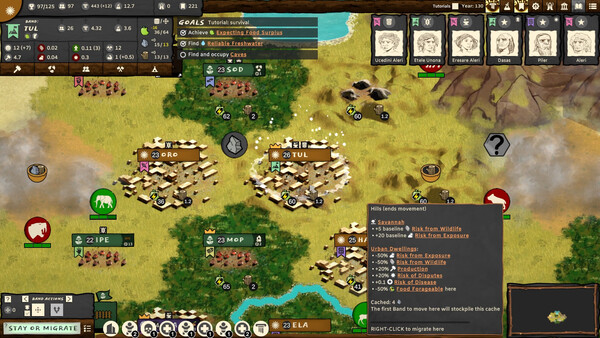
Key Early Discoveries
Some discoveries are transformative enough to reshape your entire strategy. Fire is arguably the most important early discovery — it enables cooking, which improves food quality and preservation, and provides warmth and protection from predators. Prioritize activities and environments that may lead to discovering fire control.
Tool-making advances are equally critical. Better stone tools improve gathering efficiency, hunting success, and crafting capabilities. Each step up in tool quality creates a noticeable improvement in your family's daily output and survival odds.
- Fire: enables cooking, warmth, and predator deterrence
- Advanced stone tools: improves all gathering and crafting efficiency
- Shelter construction: provides protection from weather and wildlife
- Food preservation: extends the shelf life of gathered and hunted food
- Basic medicine: helps characters recover faster from injuries and illness
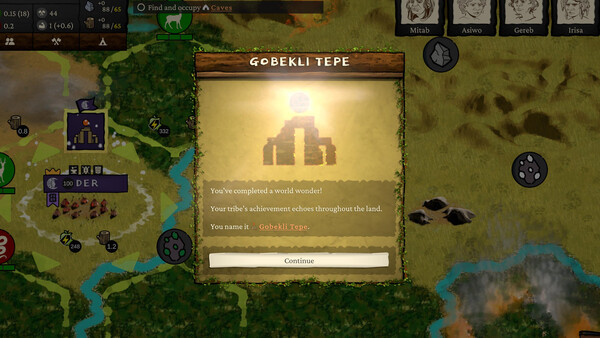
Mid-Game Technologies
As your family grows and your culture develops, more advanced discoveries become possible. Domestication of animals and early agriculture represent a major shift from nomadic life to semi-permanent settlement. These technologies require significant investment but dramatically improve food security.
Trade technologies and social structures also develop during the mid-game. Better communication and negotiation skills make trade more efficient and diplomacy more effective. Political structures emerge that allow you to manage larger groups more effectively.
| Discovery | Category | Impact | Prerequisites |
|---|---|---|---|
| Fire Control | Survival | Cooking, warmth, defense | Exposure to natural fire |
| Stone Tool Refinement | Crafting | Better tools and weapons | Repeated tool use |
| Animal Domestication | Food/Economy | Reliable food and labor | Extended contact with animals |
| Agriculture | Food/Economy | Sustainable food production | Settled lifestyle, plant knowledge |
| Basic Politics | Social | Group management, leadership | Growing population size |
| Trade Networks | Economy | Efficient resource exchange | Contact with multiple groups |
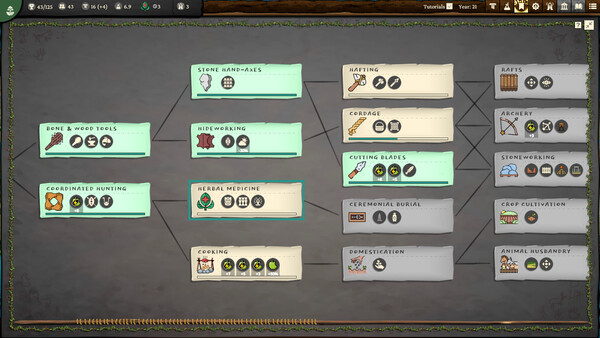
Late-Game Advancements
In the later stages of a playthrough, discoveries become increasingly complex and powerful. Advanced social structures, specialized crafting, and large-scale resource management transform your scattered families into the early stages of organized civilization.
These late-game advancements require a strong foundation of earlier discoveries and a stable society. Rushing toward them without adequate preparation can leave you vulnerable. Build a solid base of essential technologies before reaching for the most advanced discoveries.