Resources & Economy Guide
Resource management is the backbone of survival in Folk Emerging. Understanding how to gather, store, trade, and allocate scarce resources will determine whether your nomadic families thrive or perish in the Stone Age wilderness.
Types of Resources
Folk Emerging simulates a prehistoric economy built on scarcity. Resources are distributed across diverse ecosystems, and no single location provides everything your family needs. You will need to balance food, raw materials for tools and shelter, and trade goods to keep your people alive and progressing.
Food is your most critical resource and comes in many forms — foraged plants, hunted game, and eventually cultivated crops once you discover agriculture. Raw materials like stone, bone, and wood are essential for crafting tools and weapons. Trade goods are items valued by other groups that you can exchange for things you lack.
- Food: foraged plants, hunted meat, fish, and eventually farmed crops
- Stone and flint: essential for tool and weapon crafting
- Wood: used for shelters, fires, and basic tools
- Bone and hide: obtained from hunting, used for advanced crafting
- Trade goods: rare or surplus items valued by rival groups
Gathering and Production
Each character in your family can be assigned to gather specific resources based on their skills and the surrounding terrain. Characters with higher relevant skills gather faster and find rarer materials. Assigning the right person to the right task is the foundation of an efficient economy.
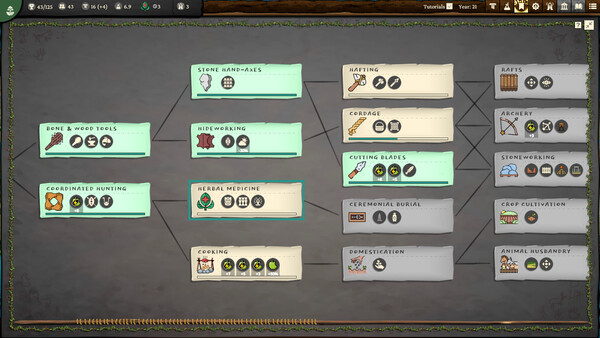
As you progress through the technology tree, new production methods become available. Discovering fire unlocks cooking, which makes food more nutritious and longer-lasting. Later discoveries like domestication and agriculture transform your economy from pure gathering to a more sustainable production model.
Resource Scarcity and Seasonal Cycles
The Stone Age world of Folk Emerging follows natural cycles. Some resources are abundant in certain seasons and scarce in others. Planning your movements and stockpiling during times of plenty is essential to surviving lean periods.
Scarcity also drives conflict. When multiple groups compete for the same limited resources, tensions rise. You may need to defend your gathering grounds, negotiate shared access, or move on to find untapped areas. Understanding the rhythm of resource availability across seasons and regions gives you a strategic edge.
| Season | Food Availability | Key Activities | Risk Level |
|---|---|---|---|
| Spring | Moderate — new plants emerge | Foraging, scouting new areas | Low |
| Summer | High — peak gathering season | Stockpiling, long-range exploration | Moderate |
| Autumn | Moderate — harvesting, hunting prep | Preserving food, trading surplus | Moderate |
| Winter | Low — scarce and harsh conditions | Surviving on stockpiles, minimal movement | High |
Trading for What You Need
Trade is your primary tool for overcoming resource scarcity. The game distributes resources unevenly across the map, so what is common in your area may be rare and valuable to another group. Identify your surplus early and seek out trade partners who have what you need.
Building strong trade relationships over time can create a reliable supply chain that reduces your dependency on any single resource location. This is especially important as your family grows and resource demands increase.
- Identify your region's unique or surplus resources early
- Establish recurring trade routes with friendly groups
- Never trade away your last reserves of any critical resource
- Diversify your trade partners to avoid dependence on a single group